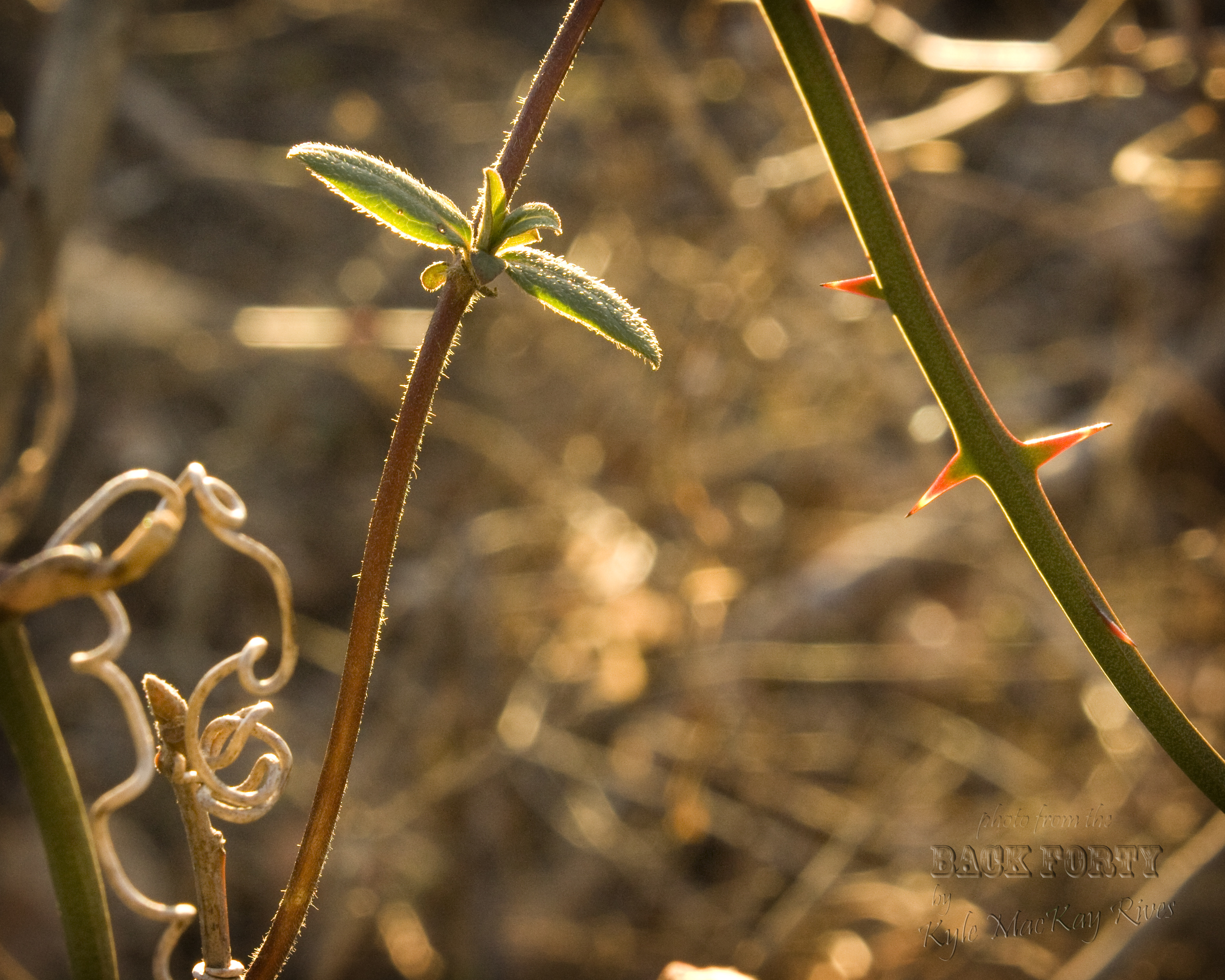
Ahh, the wonderful feeling when the sun is golden and all the world is gilded by the sun’s kisses!
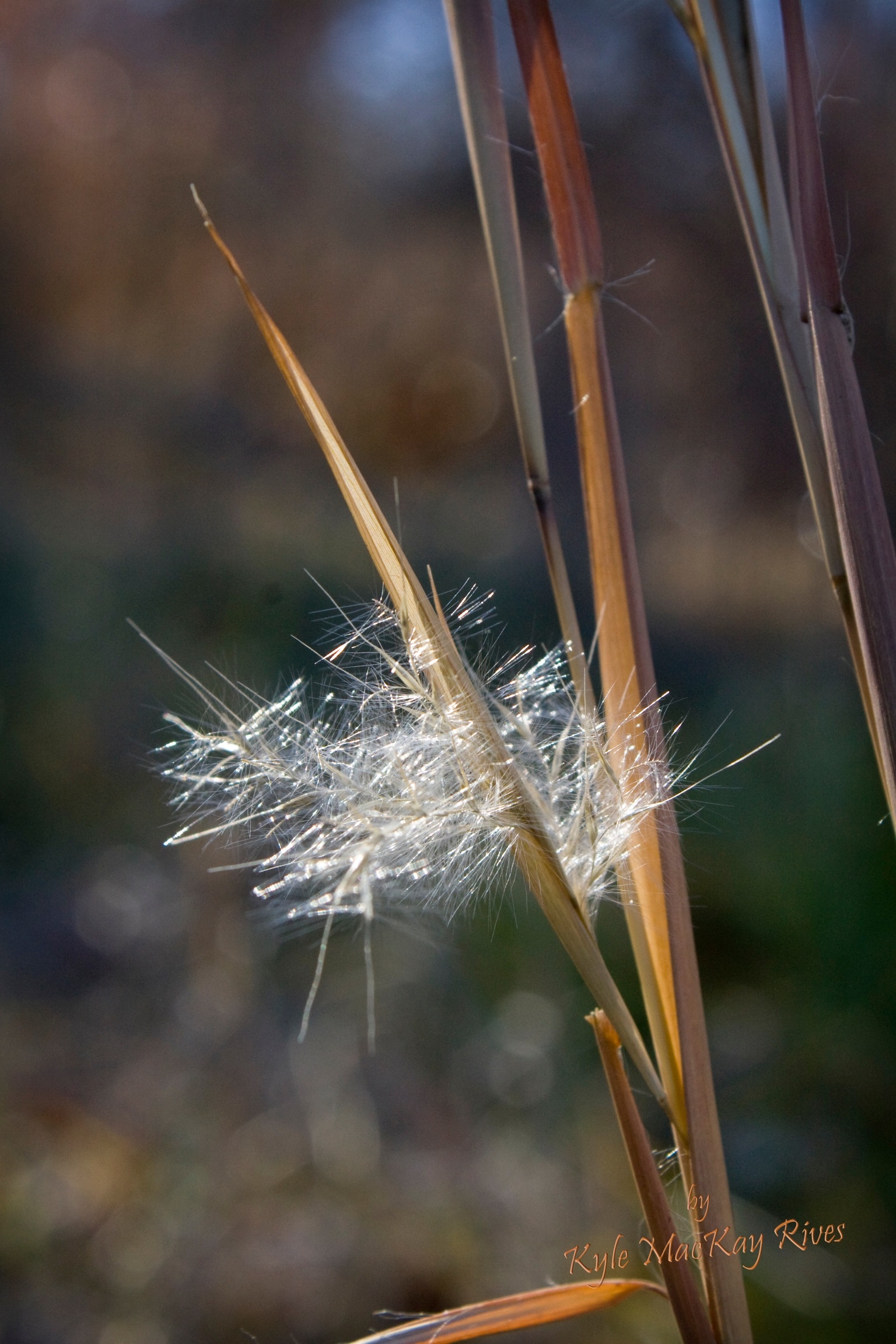
The sunshine softens hardy leaves, highlights fantastical shapes, and even transforms those sharp thorns into beautiful sculptures.
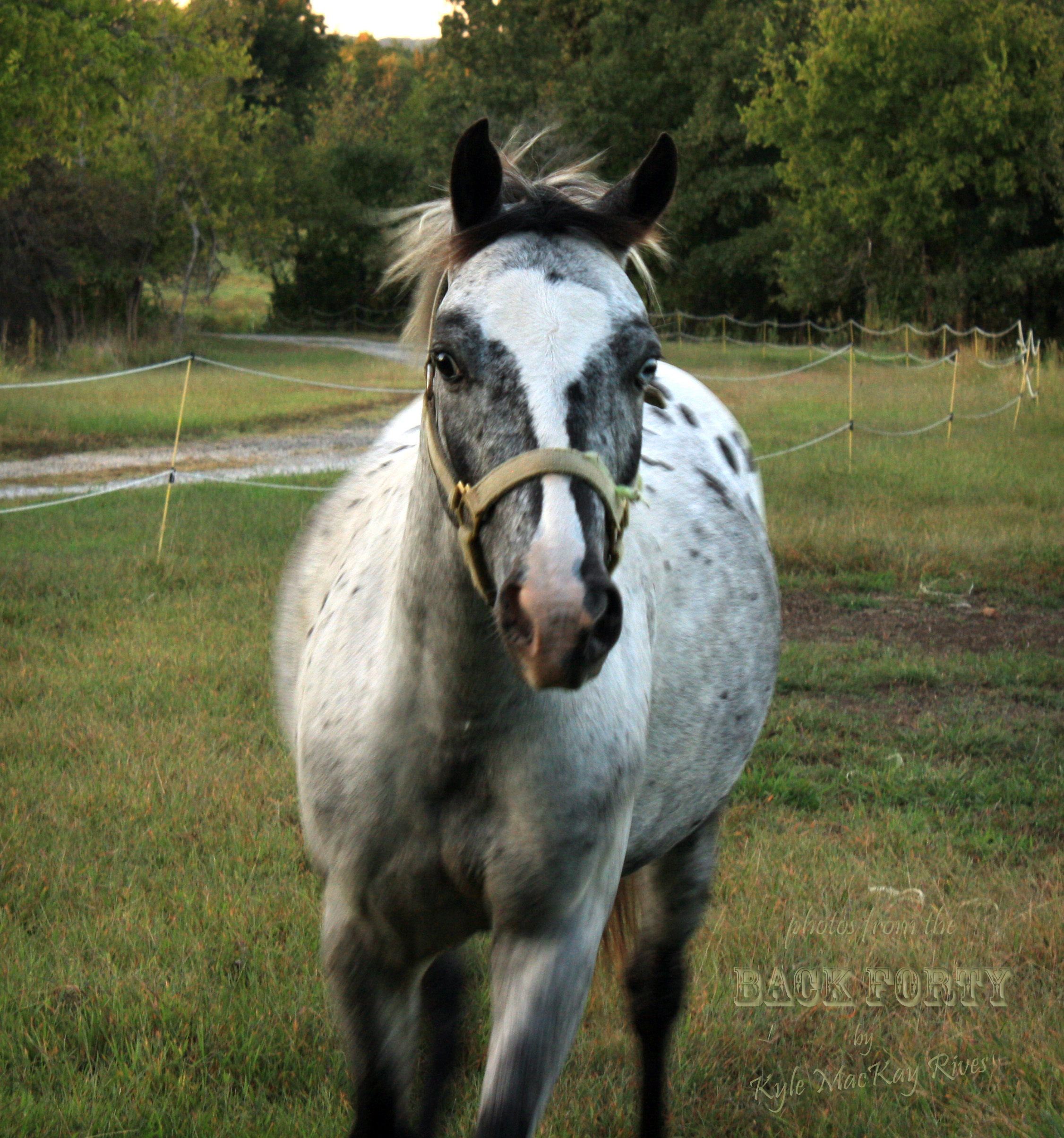
While this is a portrait of Blaze, Bridger’s POA (a Pony of the Americas – basically an Appaloosa in miniature), it is also an afternoon flashback, to a time when the grass was green. To when there was grass to be green! In the past we would have noticed Blaze’s eager expression, his black and white and pink coloring, his ratty old halter… This time when we saw this photo, Bridger and I both thought, “Wow, look how green that grass is!”
We know Blaze and his buddies join us in hoping La Nina will relent and we will soon see green grass growing in the pastures.
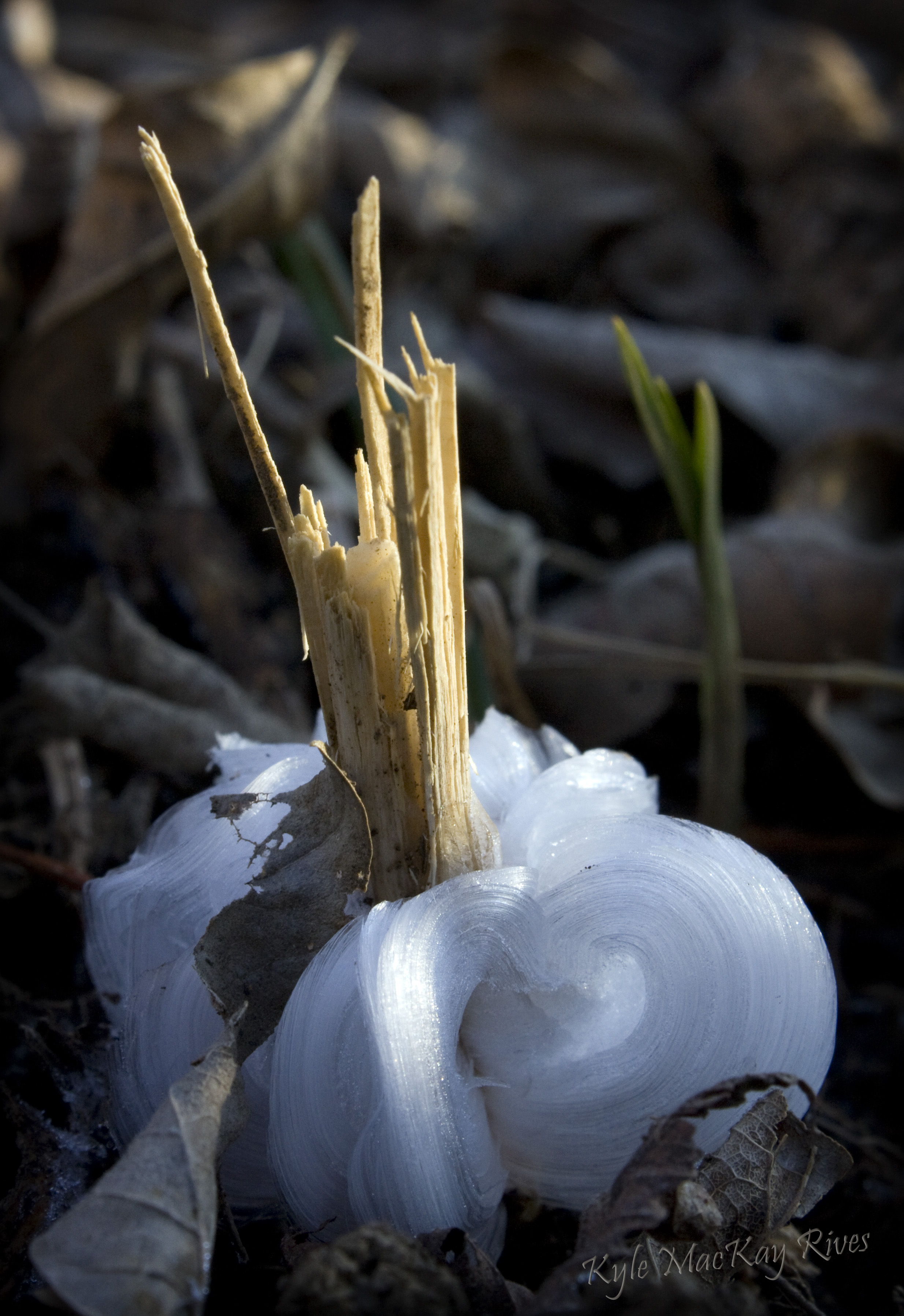
I always mentally referred to these icy extrusions as frost flowers, but had never read anything about them.
Inspired by my friend Travis’ success just Googling the word or phrase that comes to mind, I tried typing frost flower in the search field… Guess what? These structures are commonly referred to as – frost flowers! They also have a scientific name, apparently: Crystallofolia. This website was particularly detailed: http://w3.biosci.utexas.edu/prc/VEVI3/crystallofolia.html
Afternoon flashback: It is summer. The fields are alive with chirping and any move through the grass scares up hundreds of grasshoppers. Or are they crickets? Or katydids?The photo here is of a katydid. I love its long, graceful antennae, and that’s how we can tell it is not a grasshopper, despite the fact that it lives in the grass and hops wildly when disturbed.
The chickens don’t care whether the hoppers are crickets, grasshoppers or katydids, they just love chasing them across the lawn and into the pastures. The best part for them is catching and eating these apparently delicious insects!
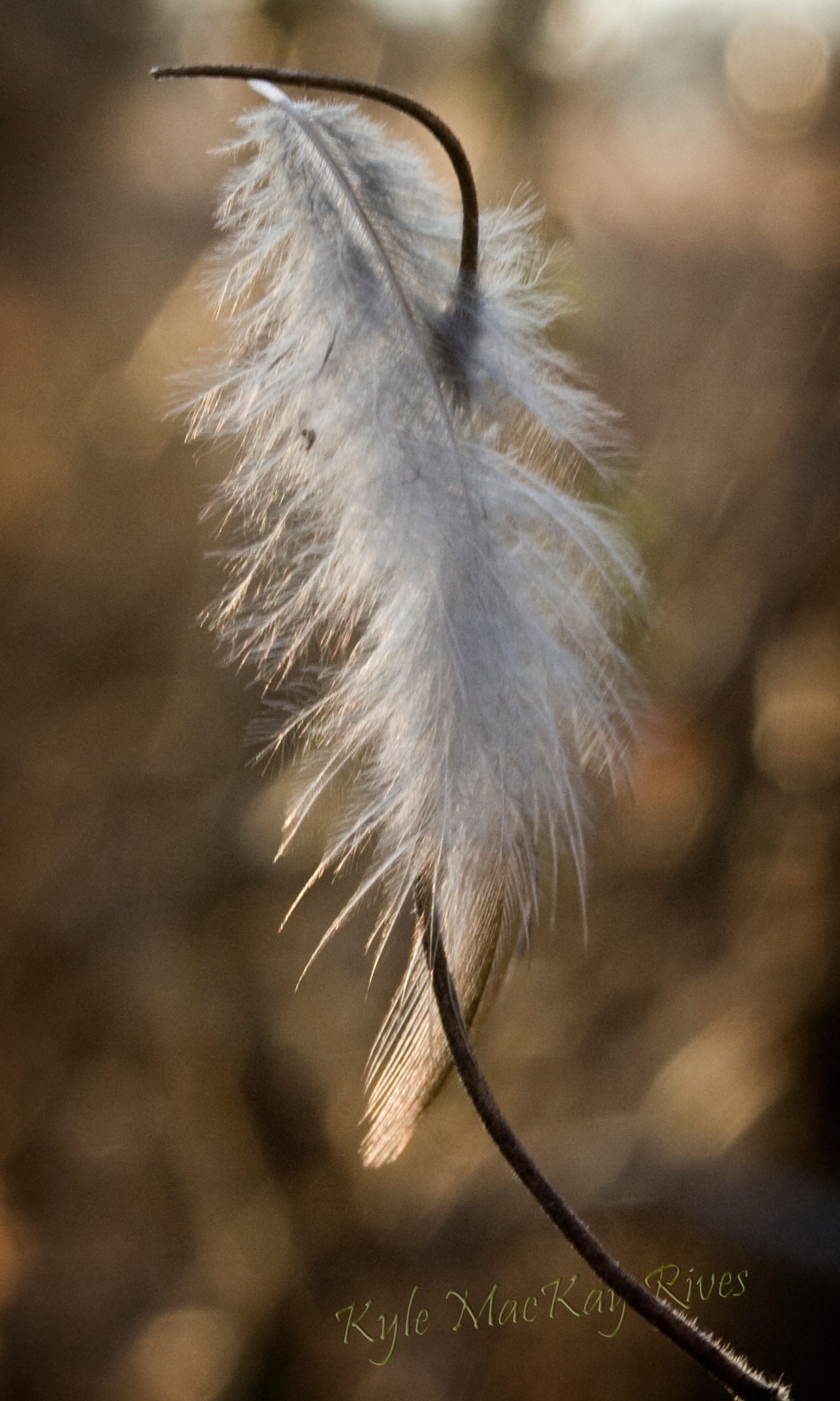
This is the same feather from another angle – I liked the little glints of sunlight off the soft, plumulaceous barbs. Plumulaceous barbs: the part that looks like down and does not stick together.
I was having trouble recalling that word, so I consulted The Feather Atlas, an online resource maintained by the US Fish and Wildlife service. Here is a link: http://www.lab.fws.gov/fa/glossary.php
She’s busy as a bee! I was out of town, out of state, actually, and had just a little downtime, so I took a stroll with my camera. It was that wonderful golden hour as the sun sinks to the horizon, and there she was with her sisters, busily trying to collect as much nectar as possible before curfew. Her bread baskets are full of pollen, too.